
Driveway removal costs in Snohomish County can swing a lot. The size, the material, and how easy it is to get equipment in and out all matter.
One detail that changes the price right away is the scope. Some quotes cover slab-only removal, meaning the existing concrete or asphalt gets broken up and hauled off. Other quotes include extra excavation and grading so the area is ready for the next step, like a new driveway, gravel, or landscaping.
As a starting point, nationwide pricing often lands around $2 to $6 per square foot for concrete removal and $3 to $7 per square foot for asphalt removal, including haul-off in many cases. On a typical 200 to 600 square foot driveway, that often puts slab-only removal in the $1,200 to $4,500 range. Local permits, transfer station fees, and recycling rules can push the total up or down.
Understanding the Average Cost of Driveway Removal in Snohomish County
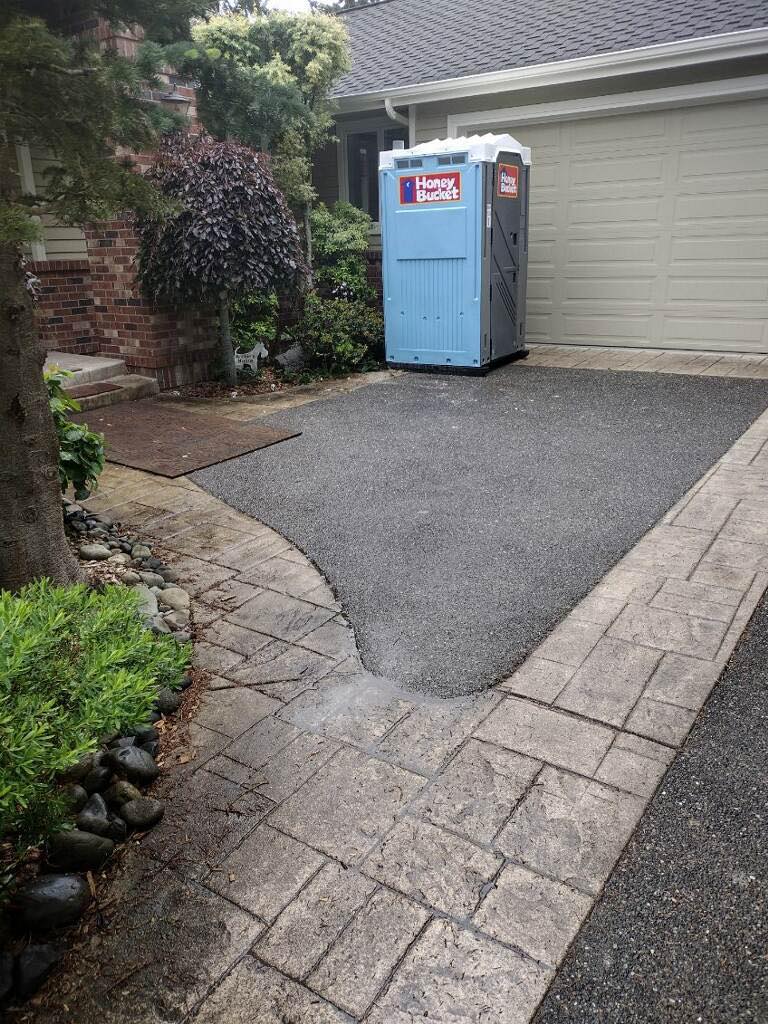
A driveway removal quote is not just about breaking up the slab. PNW Demolition builds pricing around the full job so you do not end up with surprise add-ons later.
Most driveway removal pricing covers equipment and operator time, labor for cutting and breaking, loading and cleanup, and hauling to the correct drop site. Concrete and asphalt are often recycled, but recycling still has fees at many facilities, and weight matters.
Because every driveway sits on different ground, most contractors give site-specific estimates instead of a one-size number.
A basic removal plan usually looks like this: the crew protects nearby edges, breaks the slab into manageable pieces, loads material for haul-off, and then leaves the site either rough-graded or finish-graded based on what you want next.
Typical Price Ranges for Washington State in 2026
Here is a simple baseline using common for Snohomish County Driveway Removal price ranges. These include demolition and hauling, but not new driveway installation.
- Small driveway (200 sq ft): $600 to $1,600
- Medium driveway (400 sq ft): $1,200 to $3,200
- Larger slab (800 sq ft): $2,400 to $6,400
If your slab is thicker than normal, has rebar, or has tight access, it can land above these ranges. A thin patio-style slab is not the same as a driveway that was poured thick for heavier vehicles.
Concrete vs. Asphalt, Which Costs More to Remove?
Concrete is dense, and many slabs have wire mesh or rebar. That can add cutting time and hauling weight. Concrete removal often lands around $2 to $6 per square foot as a baseline.
Asphalt can be faster to break up, but pricing can still climb based on thickness, base rock, and disposal rules. Asphalt removal often lands around $3 to $7 per square foot.
The real cost driver is not only the surface. It is also the base under it and what has to happen after it comes out. If the base is soft, muddy, or uneven, prep work can become part of the job.
Key Factors That Affect Driveway Removal Cost
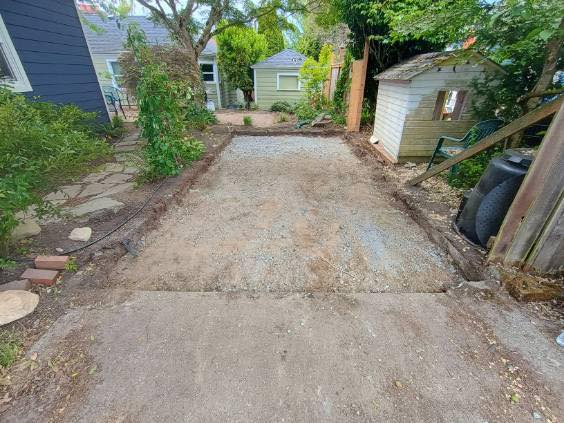
Driveway Size and Layout
A long driveway, a turnaround pad, or a driveway with tight curves can take more machine time than a simple rectangle. Even with the same square footage, a broken up layout can slow loading and hauling.
If the slab wraps around a side yard, garage, or gate area, crews may also need to work in smaller sections, which adds time.
Thickness and Reinforcement
Thicker slabs take more breaking power and more time. Reinforcement like rebar and wire mesh also slows the job because it adds cutting and sorting.
A common example is a driveway that has rebar near the apron or heavy reinforcement near the garage. Those areas can take longer than the open middle section.
Site Access
Access changes everything. If a skid steer and trailer can get right up to the driveway, removal is faster. If the crew has to work around fences, tight gates, steep slopes, or parked street areas, the pace slows.
Tight access can also mean more hand work and more trips to the haul vehicle, which pushes labor up.
Debris Disposal and Recycling Fees
Disposal is a real part of your total price. Concrete and asphalt are heavy, and many facilities charge by weight. Recycling rules can also affect where the material goes and what it costs to drop.
If the slab is thick, reinforced, or damp from weather, hauling weight can rise. That is one reason quotes can look different even for driveways with similar square footage.
Sub-Base Conditions
Some driveways sit on soft or wet soils, especially in low spots. If the base is unstable, extra excavation may be needed to get the area ready for the next step.
This matters most if you are replacing the driveway. A weak base can lead to future sinking, cracking, or drainage issues.
Site Grading and Leveling
After the slab is removed, the site is not always “done.” Leveling and grading may be needed so the area drains right and is ready for new concrete, asphalt, gravel, or landscaping.
If water already pools near the garage or along the driveway edge, grading is the moment to correct it. That kind of fix can save headaches later.
Site Assessment and Utility Setup
Before removal starts, a crew may set protection for nearby edges, confirm utility locations, and plan the safest way to work without damaging nearby structures. This is also where a contractor can spot issues like a slab that runs under a walkway, ties into a curb approach, or sits tight against foundation edges.
Permits and Local Regulations
Many driveway removals on private property do not need a building permit if you are only removing an existing slab. Permits become more likely when the work touches the public right-of-way, sidewalks, curbs, or the street approach.
Right-of-Way Permits
If any part of the work is in the county road right-of-way, Snohomish County Public Works may require a right-of-way permit or access permit. This comes up most often at the street edge, not the private slab area.
This often applies when:
- The driveway connects to a county road and the approach needs work
- The job includes a culvert at the driveway entrance
- Concrete or asphalt work extends into sidewalk or curb areas
City vs. County Rules
Rules can change based on where you live. Cities like Everett, Lynnwood, Edmonds, and Snohomish can have their own right-of-way requirements and fees. If your driveway ties into a city street, the permit path is usually through that city, not the county.
[LINK PLACEHOLDER: Snohomish County right-of-way permits] If your driveway ties into a city street, the permit path is usually through that city, not the county.
A simple way to think about it is this. Private slab removal is often straightforward. Work at the street edge is the part that can trigger permits, traffic control rules, and extra inspections.
Pacific Northwest Considerations
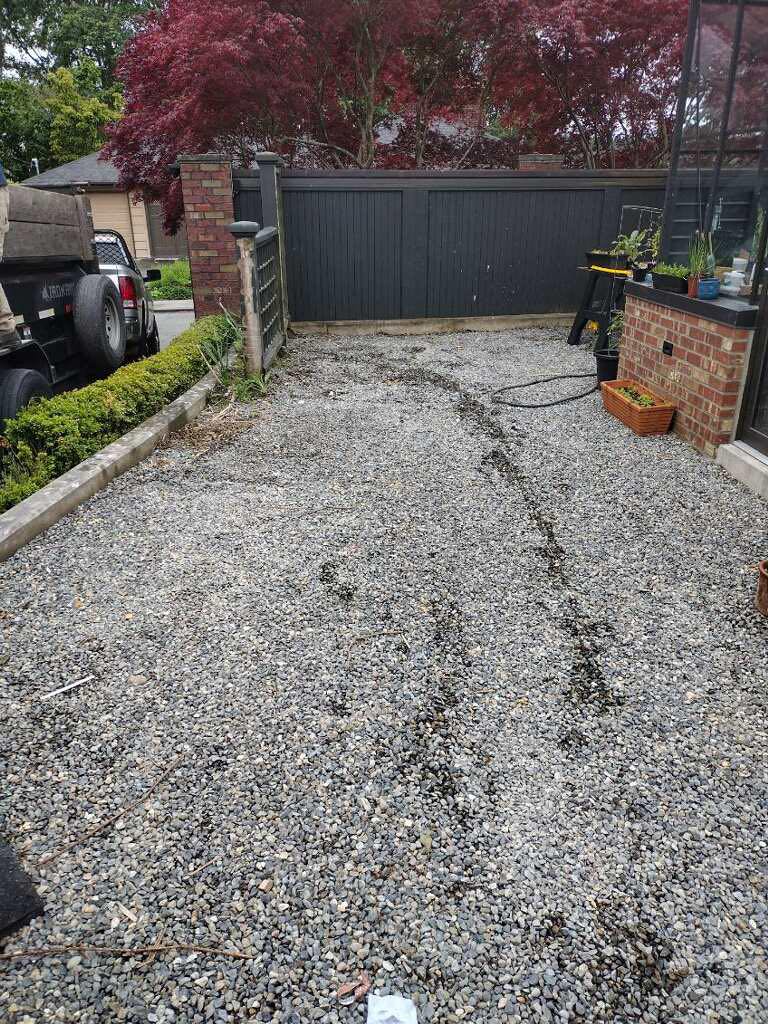
Driveways in Snohomish County deal with rain, roots, and soils that can shift. Those local factors can change the time it takes to remove the slab and prep the base.
Tree Roots and Soil Conditions
Tree roots can grow under slabs and lift edges over time. When the slab comes out, roots can slow machine work and may need extra cutting or removal.
Soil can also be a factor. Some areas have wetter ground or softer sub-base. If the soil is muddy, equipment may need more care to avoid rutting the yard. If the base is unstable, extra excavation and gravel may be needed before a new driveway goes in.
Best Time to Schedule
Late spring through early fall is often the easiest window for driveway demolition. The ground is usually drier, and that can make removal, hauling, and base prep move faster.
Winter work can still be done, but wet conditions can slow the pace and increase cleanup needs.
Getting an Estimate
Professional driveway removal gives you a clean slate and avoids common DIY issues like hidden disposal costs, uneven base prep, or damage to nearby edges.
For a site-specific estimate, Contact PNW Demolition to schedule a free on-site quote based on your driveway, access, and soil conditions.